The quietest way to travel might also be the kindest
Remote cabin vs hotel:
When we think of sustainable travel, we often picture reusable water bottles and carbon offsets. But the real impact starts earlier with where you choose to stay.
At first glance, remote cabin vs hotel might seem like equals. A bed. A roof. A place to rest. But when it comes to the planet, the difference is massive.
Remote cabins are designed for low-impact travel. Here’s why they’re better for the earth and for you.
1. Hotels are built big. Cabins are built light.
Hotels require roads, parking lots, water infrastructure, electricity grids, and heavy construction. They reshape landscapes to fit human needs.
Remote cabins do the opposite.
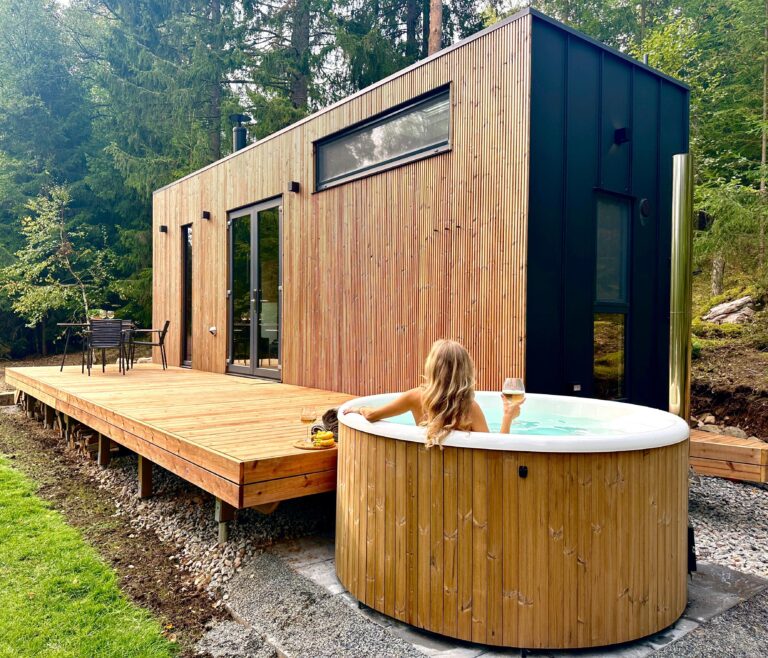
They’re modular, off-grid, and light on the land, often built without digging or permanent foundations. They’re placed on private land that’s already loved, working with nature instead of over it.
The result?
- No heavy excavation
- Minimal soil disruption
- Trees left standing
It’s not just design philosophy, it’s measurable. Studies on life-cycle impacts of tiny homes show they use dramatically fewer resources than conventional buildings, with one Australian case study finding construction-related emissions reduced by nearly half compared to standard housing (Crawford & Stephan, 2020).
2. Energy use is smarter (and smaller)
Traditional hotels run 24/7. Lobby lights. Air conditioning. Industrial laundry.
Even when they’re empty, they consume.
Remote cabins are built for efficiency, not excess:
- Solar-powered when possible
- Heated selectively, not across entire buildings
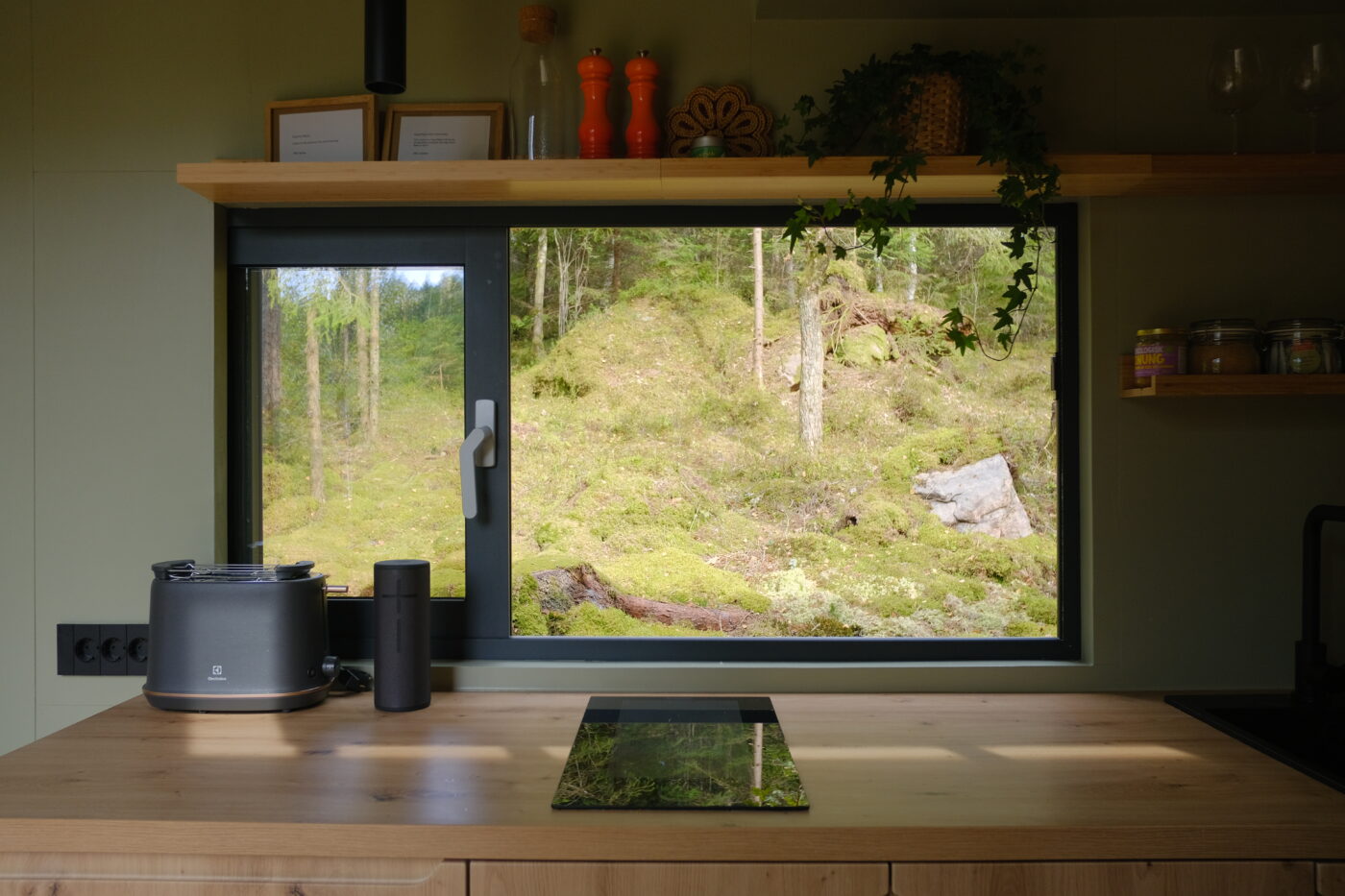
- Natural ventilation instead of energy-intensive systems
Compact size that naturally reduces consumption.
3. You travel slower and leave lighter
Hotels are made for turnover, in and out in a weekend. But remote cabins invite something deeper: a slower rhythm.
When you stay longer, move less, and stay rooted in one beautiful place, the planet breathes easier.
- Fewer transport emissions
- Less frequent cleaning and washing
- More meaningful connection with the land
It’s eco-tourism without the footprint.
In comparison, remote cabin vs hotel data shows hotels give off much more carbon per night. A basic UK hotel stay creates around 10 kg of CO₂, while global averages are closer to 40 kg per night, and in the U.S., most hotels fall between 15 and 27 kg per night.
Put simply: even when someone lives in a tiny house or remote cabin full-time, its daily footprint is still 6–16 times smaller than staying in a hotel. That’s a huge gap in energy use and emissions.
4. Your stay supports locals, not corporations
Many remote cabins are placed on land owned by real people, not hotel chains. That means your booking supports:
- Landowners living near forests, lakes, and fjords
- Local economies that aren’t tied to mass tourism
- A model of growth that protects rural spaces instead of replacing them
If you’re looking for a more intentional way to travel, start with a remote cabin. Fewer distractions. Less impact. More meaning!